Best Basement Vapor Barrier Floors for Moisture Control
The best basement vapor barrier floor material depends on whether you are covering a concrete slab before installing flooring or sealing exposed soil in a crawl space. ROBERTS 70-117 is suited to floating floor installations over concrete, while ROBERTS 70-198 is intended for certain nailed or stapled wood-floor installations. BASEAIRE films offer larger, thicker coverage for ground barriers, and Whitecap matting can add drainage and protection rather than replace a vapor barrier.
| Product | Best For | Key Difference |
|---|---|---|
| ROBERTS 70-117 | Floating floors over concrete | 6 mil film, 600 sq. ft. |
| ROBERTS 70-198 | Nail-down or staple-down wood floors | Silicone moisture barrier underlayment |
| BASEAIRE 10 mil | Large ground-barrier projects | 10-by-100-foot polyethylene roll |
| BASEAIRE 12 mil | Projects calling for thicker film | 12 mil polyethylene roll |
| Whitecap dimple matting | Drainage and barrier protection | Creates a water-flow air gap |
ROBERTS 70-117 Moisture Barricade

This 6 mil polyethylene film covers 600 square feet and is described as a Class 1 vapor barrier for vinyl, laminate, SPC, and engineered wood flooring. The listed features identify concrete slabs and laminate with pre-attached underlayment as intended applications.
Best for: Homeowners preparing a concrete basement slab for a compatible floating floor. Its stated flooring uses make it a more direct fit for under-floor installation than general-purpose crawl-space sheeting.
Limitation: The product is intended for flooring installations, not as a substitute for fixing active water intrusion. Confirm the flooring maker’s installation requirements before laying it.
ROBERTS 70-198 Silicone Underlayment

This 6 mil underlayment measures 31.5 inches by 76.25 feet and provides 200 square feet of coverage. The manufacturer describes it for staple- and nail-down installations of solid and engineered wood floors. It is designed to reduce vapor flow without trapping moisture and is listed as meeting perm ratings recommended by the National Wood Flooring Association.
Best for: Buyers installing a compatible solid or engineered wood floor with a nail-down or staple-down method. It is a better fit for that installation type than a general polyethylene sheet.
Limitation: Its listed use is specific to wood-floor installation methods; it is not presented as a general ground-cover liner or drainage product.
BASEAIRE 10 Mil Vapor Barrier

This polyethylene roll measures 10 feet by 100 feet and is listed to cover up to 1,000 square feet. It has a black side intended to block light and a white side described as providing over 90% reflectivity. The features position it for crawl-space encapsulation and other ground-cover uses, and describe the film as tear-resistant.
Best for: Buyers covering a broad area of exposed soil or considering a heavier general-purpose film for a moisture-control project. The large roll can suit a ground-barrier layout better than narrow flooring underlayment.
Limitation: The listed applications emphasize crawl spaces and ground cover, not installation beneath a specific basement flooring system. Verify the intended assembly and local requirements.
BASEAIRE 12 Mil Vapor Barrier

This 12 mil polyethylene film comes in a 10-by-100-foot roll with coverage listed up to 1,000 square feet. Like the 10 mil option, it has black and white sides, with the white side described as highly reflective. The product features also describe tear resistance and uses including crawl-space encapsulation and protecting surfaces.
Best for: Buyers who want the thicker of the two BASEAIRE film options for a large ground-cover project. It may be the more suitable choice when the project specification calls for 12 mil film.
Limitation: Thickness alone does not establish suitability under every basement floor. Check the flooring system’s instructions rather than assuming this crawl-space-oriented sheet can go beneath a finished floor.
Whitecap Dimple Drainage Matting
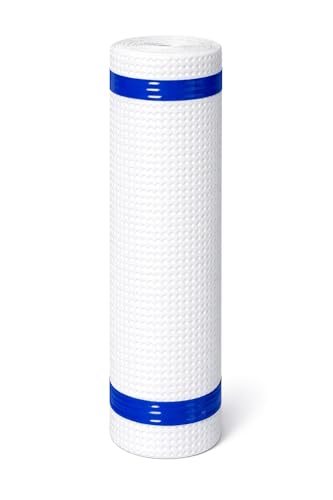
This 4-by-50-foot high-density polyethylene matting has a raised dimple design that creates an air gap and directs water toward drains or sump systems. Its stated role also includes protecting vapor barriers and floors from punctures, abrasion, and wear.
Best for: Buyers addressing water movement or adding a protective layer over a vapor barrier as part of a suitable floor or foundation assembly. It complements a barrier rather than serving as the same kind of flat film.
Limitation: It is drainage matting, not a standalone vapor-barrier sheet. The product’s drainage function depends on an appropriate route for water to reach a drain or sump.
Buying Guide: How to Choose a Basement Vapor Barrier Floor
Are you covering concrete or exposed soil?
For a concrete basement slab under floating flooring, start with products specifically described for flooring over concrete, such as the ROBERTS 70-117. Exposed soil is a different situation: large polyethylene rolls such as BASEAIRE’s are described for crawl-space and ground-cover applications. Do not assume one product category fits both jobs.
What flooring installation method will you use?
Match the material to the floor system. The ROBERTS 70-117 lists floating resilient and laminate flooring uses. The ROBERTS 70-198 is listed for staple- and nail-down solid or engineered wood. Follow the flooring manufacturer’s directions for required vapor control, seams, and installation layers.
How much thickness and coverage do you need?
Compare the project’s required thickness with the roll specification. The ROBERTS film is 6 mil, BASEAIRE offers 10 mil and 12 mil sheets, and the Whitecap mat is a dimpled drainage layer rather than a flat film. Measure the area and allow for overlaps and cuts; listed coverage does not account for every layout.
When does drainage matting make sense?
A vapor barrier slows vapor movement, while dimple matting creates a path for water to move toward a drain or sump. If a basement has active leaks or standing water, address the source and drainage plan before covering the floor. A sheet or mat should not be treated as a repair for water intrusion.
Frequently Asked Questions
Can I put a vapor barrier over a basement concrete floor?
Some flooring systems call for a vapor barrier over concrete. Choose a product listed for the flooring type and follow the floor manufacturer’s installation instructions.
Is 6 mil or 10 mil plastic better for a basement floor?
Neither thickness is automatically better for every assembly. The right choice depends on the flooring system and whether the project is a floor underlayment or a ground-cover barrier.
Is crawl-space plastic the same as basement floor underlayment?
No. Crawl-space film is described for covering soil, while flooring underlayment is selected for a particular floor installation. Check the product’s stated use before installing it.
Does a vapor barrier stop basement leaks?
A vapor barrier is intended to limit moisture vapor, not repair active leaks or direct bulk water. Investigate and address water entry separately.
Can dimple matting replace a vapor barrier?
Not based on the listed product features. Whitecap matting is described as a drainage and protective layer, so it should not be treated as a substitute for a vapor-barrier film.