Best Plastic Concrete Footing Forms for Foundations and Outdoor Projects
The best plastic concrete footing form depends on whether you are pouring a post or column footing or shaping a walkway edge. The two 22-inch footing forms below are the closest matches for foundation-style pours; flexible plastic forms are better suited to curbs, paths, and flatwork. Compare each product’s dimensions and intended use before buying, since edging molds are not interchangeable with a footing base.
| Product | Best For | Form Type |
|---|---|---|
| 22 in. Form Concrete Foot Plastic | Basic footing projects | Footing base |
| YXZZZZ 22-Inch Footing Form | Specified base dimensions | Footing base |
| U0U 4 x 78.7-Inch Forms | Short garden paths | Flexible edging |
| FULEIYA 13-Foot Flex Forms | Curved landscaping edges | Flexible edging |
| Walttools Set of Four | Reusable flatwork shaping | Flexible edging |
22 in. Form Concrete Foot Plastic

This Generic plastic footing form is designed for forming concrete footings and can be attached to construction tube. The listed instructions say it can be sized, placed in an excavated hole, and backfilled. Rebar may be used to reinforce the footing or column when needed.
Best for: Buyers seeking a straightforward footing base that connects to construction tube. It was selected because its listed purpose directly matches plastic concrete footing forms. Limitation: The listing does not provide detailed dimensions beyond the 22-inch name, so confirm the complete measurements and fit for your project before ordering.
YXZZZZ 22-Inch Plastic Footing Form

This plastic form is listed as 22 x 22 x 16.5 inches, with a 6-inch base thickness. It can be sized, attached to construction tube, set in an excavated hole, and backfilled. The product information also notes that rebar can be used to reinforce a footing or column if needed.
Best for: Buyers who want stated dimensions for planning a footing or column base. It was selected because it is specifically described as a concrete footing form and gives more dimensional detail than the other footing option. Limitation: The listing does not explain what sizing adjustments are possible, so verify the final configuration before pouring.
U0U Flexible Garden Path Forms

This two-piece polyethylene set is intended for walkways, garden edging, paver-style casting, and stepping-stone projects. Each form measures about 4 x 78.7 x 0.24 inches. The flexible material can be shaped and positioned with wooden stakes or nails, and the forms are described as removable and cleanable.
Best for: DIY landscaping projects that need flexible, long edging sections rather than a structural footing base. It was selected as a relevant plastic concrete form for outdoor concrete work. Limitation: These are walkway and edging molds, not the 22-inch footing-style forms above.
FULEIYA 13-Foot Flexible Forms
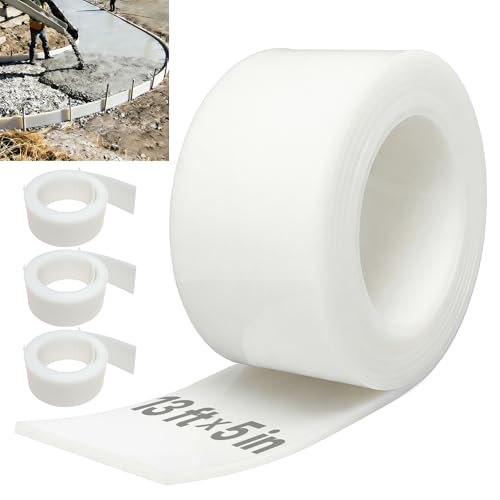
FULEIYA supplies three PE plastic forms, each listed as 13 feet long, 5 inches wide, and 1/4 inch thick. The forms are designed to bend around curved garden paths, rounded steps, and flowerbed edges. The manufacturer describes them as reusable and easy to clean and remove after forming.
Best for: Buyers shaping longer, curved landscape edges or concrete flatwork. The three sections can be combined for larger layouts. Limitation: Their 5-inch width and flatwork purpose do not make them a replacement for a footing form sized for a post or column.
Walttools Set of Four Flex Forms

Walttools’ flexible plastic forms are designed for curbs, rounded steps, patios, walkways, and other flatwork. The listed features emphasize bending to create curved or irregular layouts, staking the forms in place, and reusing them for repeated shaping work. The set includes four pieces.
Best for: Buyers who need flexible forming guides for curved concrete edges and want multiple pieces for a layout. It was selected as a reusable option for non-footing concrete work. Limitation: The product is described for flatwork and curbs, not as a deep footing base.
Buying Guide: How to Choose Plastic Concrete Forms
Do you need a footing base or an edging form?
Start with the concrete element you are forming. A footing form is intended to shape a base for a post, column, or similar project and may connect to construction tube. Flexible edging forms shape the sides of paths, curbs, patios, or garden borders. Choose a footing-specific product for footing work; a long, narrow edging form serves a different purpose.
Which dimensions should you compare?
Check the form’s width, length, height, and thickness against the planned excavation or concrete profile. The YXZZZZ option lists a 22 x 22 x 16.5-inch form and 6-inch base thickness. The walkway options use long, narrow sections, with listed widths around 4 or 5 inches. Confirm measurements and project requirements before purchase.
Will the layout be straight or curved?
For a straight or gently curved garden edge, flexible PE forms can be staked and positioned along the layout. Longer sections can reduce the number of joints, while multiple shorter pieces may be easier to handle or arrange. Check the product’s listed set quantity and dimensions when estimating coverage.
What should you check before pouring?
Follow the form manufacturer’s setup guidance and applicable project plans. Confirm that the form is positioned securely, that its dimensions match the intended pour, and that any reinforcement requirements are addressed. Product listings provide general features but do not replace project-specific structural guidance.
Frequently Asked Questions
Can walkway forms be used as concrete footing forms?
These products are listed for edging, curbs, paths, or flatwork, not as footing bases. Choose a product specifically described for footings when forming a post or column base.
Can the 22-inch footing forms be used with rebar?
The two footing listings state that rebar can be used to reinforce a footing or column if needed. Confirm reinforcement requirements for the specific project.
How are flexible plastic walkway forms held in place?
The U0U listing recommends using wooden stakes or nails to position and fix the forms before pouring.
Are the plastic forms reusable?
Some walkway-form listings describe the plastic forms as reusable and easy to remove or clean. Check the individual product details, since reuse guidance is not stated equally for every option.