Best Over the Bed Trapeze for Independent Transfers and Safe Repositioning
Choosing an over-the-bed trapeze helps with safe transfers, independent repositioning, and caregiver relief. This guide reviews five top options, highlighting weight capacity, adjustability, mounting options, and overall stability to support seniors, disabled individuals, and bedridden patients. Use the buying guide to compare features and make a well-informed choice.
| Product | Brand | Key Benefit | Weight Capacity |
|---|---|---|---|
| Lumex 2800GA Versa-Helper Trapeze Bar | Graham-Field | Independent transfers with clamp mounting | Not specified (medical-grade) |
| RESTISLAND Trapeze Bar | RESTISLAND | Free-standing option for versatile use | Up to 400 lb |
| VEVOR Trapeze Bar for Bed Mobility (Floor Stand) | VEVOR | Heavy-duty, adjustable height with floor stand | 350 lb |
| VEVOR Trapeze Bar for Bed Mobility (Clamps & Floor Stand) | VEVOR | Secure clamp attachment with extra stability | 250 lb |
| ProHeal Medical Trapeze Bar for Bed Mobility | ProHeal | Standard trapeze with solid frame and adjustable height | 250 lb |
Note: All products are designed to aid transfers, repositioning, and independence while reducing caregiver strain. Check mounting compatibility with your bed frame and ensure weight capacity aligns with user needs.
Lumex 2800GA Versa-Helper Trapeze Bar
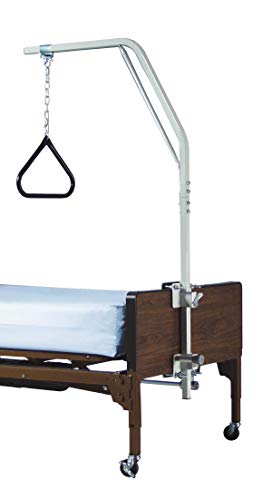
The Lumex 2800GA Versa-Helper provides safe, independent transfers by helping adults and seniors reposition or sit up in bed without full-time assistance. The triangular grab handle is height-adjustable to fit different reach needs, enhancing comfort during pulling. It clamps to bed frames, letting users attach securely to metal headboards or footboards with included hardware, saving space and improving stability.
RESTISLAND Trapeze Bar for Bed Mobility

RESTISLAND emphasizes safety and caregiver convenience with a trapeze bar designed to minimize needed assistance. It supports transfers, bed activities, exercises, and rehabilitation. Height adjustment accommodates users of varying heights and abilities. The frame uses iron and aluminum to deliver durability, with robust stability up to 400 lb and a two-star knob system to reduce wobble.
VEVOR Trapeze Bar for Bed Mobility with Floor Stand
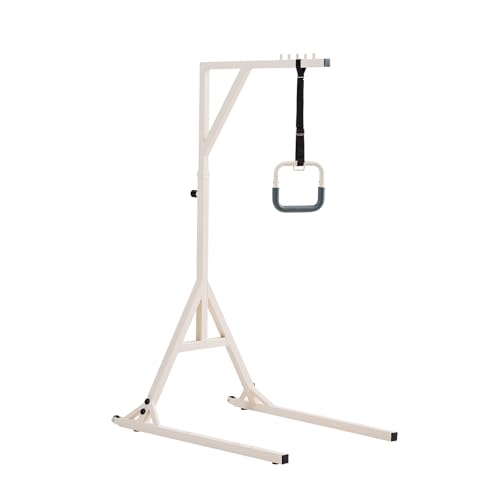
VEVOR’s trapeze bar offers a heavy-duty build with a 350 lb capacity and a floor stand for stable, freestanding use. The overall height is adjustable, and an adjustable strap along the upper support arm enables multiple positioning options. This design supports safe transfers to a wheelchair and can function as a workout tool to strengthen the upper body, promoting independence and confidence.
VEVOR Trapeze Bar for Bed Mobility (Clamps)

This trapeze uses a double-reinforced design with a sturdy base clamp system to attach securely to a bed. Its 250 lb capacity supports safe transfers, especially for users who need to move into a wheelchair or out of bed. The handle height is adjustable via a flexible strap, with horizontal adjustment along the upper arm to suit different user needs and room layouts.
ProHeal Medical Trapeze Bar for Bed Mobility

ProHeal’s trapeze bar is designed for bedridden and elderly patients needing assistance lifting themselves. It supports changing positions, getting in and out of bed, and other daily activities. The frame is made from durable high-carbon steel with an adjustable height range (approximately 45.7″ to 53.1″), offering reliable support as needs evolve.
Lumex 2800A Versa-Helper Trapeze Bar (Chrome)
The Lumex 2800A Versa-Helper mirrors the safety and independence features of its GA counterpart. It enables safe, independent transfers, accommodates height adjustments for the grip, and clamps securely to bed frames. The chrome finish adds a sleek look while maintaining robust support for bedside mobility tasks.
Buying Guide: Key Considerations And Comparisons
When selecting an over-the-bed trapeze, consider the following:
- <strongWeight Capacity: Ensure the unit supports the user’s weight plus a safety margin. Options in this list range from 250 lb to 400 lb capacities. If multiple caregivers or users share the device, prioritize higher capacity.
- <strongMounting Method: Clamps require compatible bed frames and may save space, while free-standing or floor-stand designs provide flexibility for use across rooms or different beds. Check bed frame compatibility and room layout before purchase.
- <strongAdjustability: Height-adjustable handles and adjustable straps improve comfort and positioning. A trapeze with additional horizontal arm adjustments offers more positioning options for transfers and exercises.
- <strongStability: Look for reinforced bases and secure attachment points to minimize wobble. A sturdy frame with reliable tightening mechanisms helps ensure safe transfers.
- <strongIntended Use: For transfers to a wheelchair, look for models emphasizing easy get-in/get-out-of-bed motions. For rehabilitation or exercises, consider models with a higher range of motion and durable construction.
- <strongEase Of Assembly: Some models are designed for quick setup with minimal tools, while others may require more assembly. If space or caregiver time is a factor, prioritize easier installations.
- <strongMaintenance: Powder-coated frames resist corrosion, and replaceable clamps or parts can extend product life. Check for warranty information and availability of spare parts.
Across the reviewed options, the RESTISLAND trapeze offers robust stability with a free-standing design, while Lumex and VEVOR models provide strong adjustable, clamp-based or floor-stand configurations. ProHeal presents a standard, durable build with a focus on daily bed mobility, and Lumex’s chrome variant offers a durable aesthetic with similar capabilities. For home care, assess bed frame compatibility, room layout, and user-specific mobility goals to choose the best-fit trapeze.